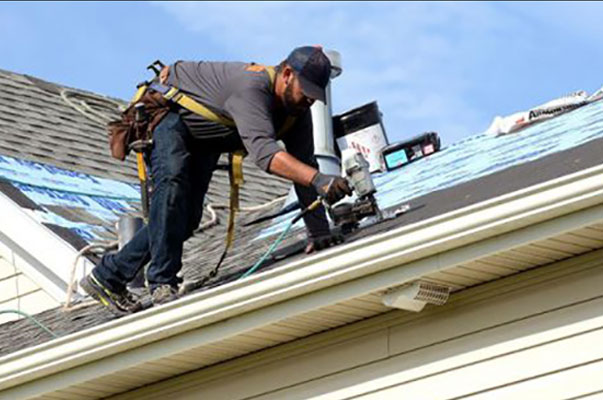
What Meridian homeowners should know before the next wind, hail, or heavy snow event
In the Treasure Valley, a roof doesn’t just “look nice”—it has to perform through wind events, hailstorms, temperature swings, and winter snow. If you’re researching residential roofing in Meridian, Idaho, it helps to understand what actually shortens roof life here, what inspectors look for after storms, and how to avoid common repair-or-replace mistakes that can cost you later. Team Construction works across Meridian and the surrounding area with homeowners, landlords, and property managers who want clear answers, quality workmanship, and help navigating storm damage and insurance restoration when it’s needed.
Why Meridian roofs fail (and it’s not always “old shingles”)
Most roofing issues in Meridian trace back to a few repeat causes—often hidden until the leak shows up on a ceiling:
Wind uplift at edges and ridges: The perimeter is where shingles start lifting first. Once a shingle creases or loosens, water intrusion becomes much more likely.
Hail impact and “bruising”: Hail can knock granules loose, crack matting, or bruise shingles in ways that aren’t obvious from the ground—but still reduce lifespan and water-shedding performance.
Flashing failures: Many leaks aren’t from the shingle field at all; they’re from pipe boots, wall transitions, skylights, chimneys, and valleys.
Ventilation and moisture imbalance: Poor attic ventilation can accelerate shingle aging, encourage condensation, and contribute to ice-related issues in colder snaps.
If you’ve recently experienced a storm, start with a professional inspection rather than guessing. Team Construction offers complimentary inspections in the area and can help you determine whether you’re dealing with a straightforward repair or broader storm-related damage. (See: Wind & Hail Damage)
The “Meridian reality”: wind + hail + winter loads
One reason Treasure Valley roofing decisions can feel confusing is that your roof has to be ready for more than one hazard type. You might replace shingles for hail resistance, but still need to think about edge detailing for wind, and load capacity for winter conditions.
Snow load isn’t just a “mountain town” concern
In Ada County communities, local amendments commonly require a minimum roof snow load of 25 psf and a minimum ground snow load of 20 psf for design criteria in many jurisdictions. That doesn’t mean your roof will always have that much snow on it—but it does influence how structures are designed and what “good construction practice” looks like in the region. (codelibrary.amlegal.com)
If you’re upgrading a roof as part of a remodel or replacing after a storm, it’s a good time to verify that the system (decking condition, ventilation, underlayment, flashing, drip edge, and attic airflow) is optimized—not just the shingles.
Quick “Did you know?” facts that save Meridian homeowners money
Did you know: many storm issues start at the edges?
Lifted shingles, missing tabs, and failing ridge caps often begin at eaves, rakes, and ridges—areas that deserve extra attention during inspections and repairs.
Did you know: hail damage can be “real” even if you can’t see it from the driveway?
Hail bruising and granule loss can shorten roof life and lead to leaks later. A close-up inspection is the reliable way to confirm condition.
Did you know: photos help insurance decisions move faster?
“Before” and “after” documentation supports a cleaner claim narrative—especially when damage is intermittent across slopes and elevations.
Repair vs. replacement: how to make the call with confidence
When homeowners ask, “Do I really need a new roof?” the honest answer depends on what’s damaged, how widespread it is, and whether the roof system can be restored to reliable performance.
If you’re already seeing interior symptoms (staining, bubbling paint, musty attic smell), consider scheduling a professional assessment sooner rather than later. For Meridian homeowners specifically, Team Construction can evaluate storm impact, pinpoint leak sources, and recommend the most cost-effective path—repair, restoration, or replacement. (Related: Roof Repair)
Step-by-step: what to do after a Meridian wind or hail storm
This sequence helps protect your home and your claim documentation while keeping safety first:
1) Do a safe ground-level walkaround
Look for downed shingles, ridge pieces, dented vents, gutters full of granules, or siding impacts. Avoid climbing on the roof—storm damage can make surfaces unpredictable.
2) Take clear photos and short videos
Capture each elevation, any debris, and any indoor staining. Date-stamped photos help establish a clean timeline if an insurance claim becomes necessary. (Hail and wind damage often presents as missing shingles, creases, granule loss, or bruising.) (legacyroofingidaho.com)
3) Limit water intrusion right away
If water is actively entering, protect valuables and use buckets. If safe to do so, place a tarp over affected areas until a professional can respond.
4) Schedule a professional inspection
A trained inspector checks the full roofing system (shingles, flashing, penetrations, valleys, attic ventilation, and decking condition) and can identify damage that isn’t visible from the ground.
5) If a claim is appropriate, keep it organized
Create a folder with photos, inspection notes, receipts, and communication records. If you want help, Team Construction assists homeowners with roof insurance claim support from storm assessment through repairs. (Learn more: Roof Insurance Claims)
Local angle: what “good roofing” looks like in Meridian neighborhoods
Meridian homes range from newer subdivisions to established properties with multiple prior repairs. In both cases, strong residential roofing outcomes come from details that don’t always show up in a brochure:
Clean intake and exhaust ventilation: Balanced airflow helps manage heat and moisture year-round.
Correct flashing at every transition: Roof-to-wall, chimney, skylight, and pipe penetrations are where water usually wins.
Storm-ready edge work: Drip edge, starter strips, ridge caps, and seal integrity matter when wind picks up.
Smart material choices for your exposure: Not every home sees the same wind exposure or tree cover. The “best” shingle or system is the one matched to your site and your priorities (durability, looks, budget, or insurance needs).
Schedule a complimentary roof inspection in Meridian
Whether you’re dealing with storm damage, a leak you can’t pinpoint, or you’re planning a proactive replacement, Team Construction provides clear recommendations, quality workmanship, and insurance claim assistance when appropriate.
Request a Free Estimate
Prefer to explore services first? Visit: Residential Roofing or Insurance Restoration.
Frequently asked questions (FAQ)
How can I tell if my roof has hail damage?
Hail damage can include granule loss, bruising, exposed matting, cracked shingles, and dented vents or metal components. Because many signs are subtle from the ground, a professional inspection is the most reliable way to confirm functional damage.
Should I repair a leak right away, even if I think I’ll replace the roof later?
Yes. Active leaks can damage insulation, drywall, framing, and even electrical components. A targeted repair or temporary weatherproofing can prevent a small roofing issue from becoming a larger restoration project.
What happens during a complimentary roof inspection?
A thorough inspection typically includes checking shingles, flashing, valleys, penetrations (vents/pipe boots), gutter lines, and often attic indicators like ventilation and signs of moisture. You should receive a clear summary of what was found and what options make sense next.
If I’m filing a roof insurance claim, what should I do first?
Start by documenting visible damage (photos/video), protecting the interior from water intrusion, and scheduling a professional inspection. If a claim is warranted, keep all notes, receipts, and communication organized. (More help: Roof Insurance Claims Support)
Do you serve areas outside Meridian?
Yes. Team Construction serves Boise and the Treasure Valley, including Meridian and Eagle, for residential and commercial exterior work such as roofing, siding, windows, remodels, and insurance restoration.
Glossary (helpful roofing terms)
Flashing: Metal or membrane components that seal roof transitions and penetrations to prevent water intrusion.
Pipe boot: A flashing assembly that seals around plumbing vent pipes passing through the roof.
Granules: The protective mineral coating on asphalt shingles that helps resist UV damage and weathering.
Ridge cap: Shingles or caps installed along the roof peak (ridge) to protect the ridge line and provide a finished seal.
Underlayment: The protective layer beneath shingles that adds water resistance and helps protect the roof deck.
PSF (pounds per square foot): A unit used in building design to describe loads like snow load or roof load requirements. (codelibrary.amlegal.com)