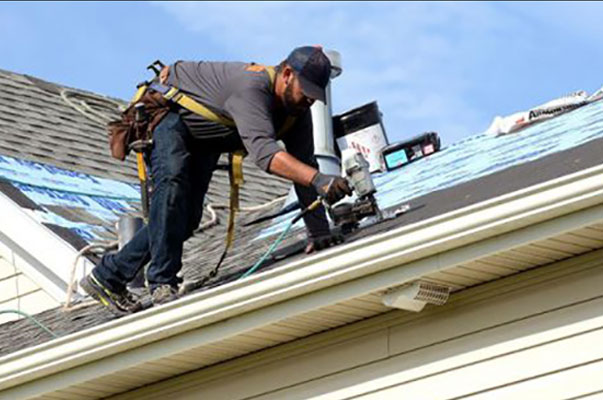
Know what to look for after a Treasure Valley storm—and what to do next
Wind and hail don’t always announce themselves with a dramatic leak. In Eagle, Idaho, it’s common for a roof to look “fine” from the driveway while shingles, flashing, vents, and ridge caps have taken a hit. The goal of this guide is simple: help homeowners and property managers understand the most common storm-damage patterns, how roof inspections work, and how to avoid claim mistakes that can cost time and money.
If you’re looking for a local roofing contractor who can inspect storm damage and help you navigate the claim process, Team Construction serves Eagle and the Treasure Valley with complimentary inspections and straightforward recommendations.
1) What wind & hail damage actually looks like (and why it’s easy to miss)
Storm damage isn’t always a single “hole in the roof.” More often, it’s a collection of small failures that reduce the roof’s ability to shed water and resist the next storm. Here are the most common issues we see after wind and hail events:
Wind damage indicators
- Lifted or creased shingles (often along edges, ridges, and hips)
- Missing shingles exposing underlayment or roof deck
- Loose ridge caps or “peeling” at the roof peak
- Flashing movement around chimneys, walls, and roof-to-wall transitions
- Vent damage (cracked housings, broken boots, shifted metal)
Hail damage indicators
- Granule loss (often shows up in gutters/downspouts)
- Bruised shingles that feel soft when gently pressed (a trained inspector checks this safely)
- Exposed fiberglass mat or fractured shingle surfaces
- Dented soft metals (flashing, vents, drip edge) that can indicate hail severity
Hail damage can be especially tricky: a roof may not leak immediately, but the protective surface can be compromised. IBHS testing shows hail can cause different damage modes—like dents, granule loss, and tears—depending on impact conditions. (ibhs.org)
2) Why a professional roof inspection matters after a storm
A proper storm inspection isn’t just a quick glance at the shingles. A qualified roofing contractor documents multiple roof components (not only shingles) because leaks often start at transitions and penetrations. Typical inspection checkpoints include:
- Roof slopes and shingle fields
- Ridge/hip caps and roof edges
- Pipe boots, attic vents, and exhaust penetrations
- Flashing at chimneys, skylights, and sidewalls
- Gutters and downspouts (granule accumulation can tell a story)
Tip for Eagle homeowners
If you suspect damage—even if you don’t see a leak—schedule an inspection quickly. Wind-lifted shingles can “reseal” and hide the crease line, and hail bruises can be subtle from the ground. Team Construction offers complimentary inspections and can help you decide whether repair, restoration, or replacement is the right move.
3) Insurance claim basics: ACV vs. RCV (and why your payout may not match your contractor bid)
One of the biggest frustrations in storm restoration comes from a simple mismatch: your roof replacement costs today vs. what your policy is designed to pay. Many policies pay using either:
- RCV (Replacement Cost Value): designed to cover the cost to replace with like kind and quality (minus deductible), often paying some depreciation later after work is completed.
- ACV (Actual Cash Value): pays the roof’s depreciated value (age/condition), which can leave a larger out-of-pocket gap.
Insurers calculate ACV by starting with replacement cost and subtracting depreciation. (progressive.com)
| Policy/Settlement Type | What it typically pays | What it means for you |
|---|---|---|
| RCV | Replacement cost (often issued in stages), less deductible | Usually the best path to restoring the roof without paying depreciation out of pocket (timing and documentation matter) |
| ACV | Replacement cost minus depreciation | Commonly leaves a significant gap on older roofs; you may pay much more beyond your deductible |
Practical takeaway: if two neighbors have the “same” storm, they can still have very different claim outcomes due to policy type, roof age, endorsements, and deductibles.
4) Claim process tips that protect Eagle homeowners (and keep the project moving)
A clean, well-documented process is the fastest way from “storm hit” to “roof fixed.” Here are homeowner-friendly steps that reduce delays:
- Document what you can safely see (ground photos of missing shingles, dented vents, downspouts, fallen debris).
- Schedule a roof inspection to determine if damage is repairable or if replacement is warranted.
- File the claim (if appropriate) and keep notes: claim number, adjuster name, inspection dates, and emails.
- Compare scope vs. scope: insurance estimates often use line items and codes; contractor bids should reflect real site conditions and local requirements.
- Don’t skip ventilation and flashing details: storm restoration should restore the whole system, not just swap shingles.
Important consumer warning
The Idaho Department of Insurance warns homeowners to be cautious about unsolicited “insurance specialists,” promises that your insurer “must” buy a full replacement, and offers to waive deductibles. (doi.idaho.gov)
5) Materials that matter in hail country: what “impact-resistant” really means
Not all “impact-resistant” shingles perform the same in realistic testing. IBHS publishes hail impact-resistant shingle ratings and updated its scorecard in late 2025, evaluating a broad share of products on the market and emphasizing that performance varies by product. (ibhs.org)
If your goal is fewer repairs after hail, it’s worth discussing shingle selection, roof edges, and system details—not just the color or architectural style. FORTIFIED guidance also highlights improvements like sealed roof decks and stronger edges to reduce storm-related water intrusion. (fortifiedhome.org)
Did you know? Quick storm-damage facts
Hail damage isn’t only “dents.” IBHS evaluates shingles for deformation, granule loss, and tearing—each can shorten roof life. (ibhs.org)
ACV claim settlements can be dramatically lower on older roofs because depreciation is subtracted from replacement cost. (bankrate.com)
“Too good to be true” claim promises are a real issue. Idaho’s DOI specifically cautions against contractors/adjusters who claim your insurer “must” replace the roof or offer to waive deductibles. (doi.idaho.gov)
Local angle: What Eagle & the Treasure Valley should plan for
Eagle sits in a corridor where seasonal wind events, thunderstorms, and localized hail can affect neighborhoods differently—even within a few miles. If your street had heavy rain and gusts, but a nearby subdivision saw hail, it’s still smart to check your roof system (especially ridges, edges, and metal components).
For rental properties and commercial buildings, a documented inspection is also helpful for maintenance planning and tenant communication—small repairs now can prevent interior damage later.
Ready for a roof inspection in Eagle, ID?
If you’ve had recent wind or hail, or you’re seeing missing shingles, granules in gutters, or ceiling stains, schedule a complimentary inspection with Team Construction. You’ll get clear documentation, repair options, and help understanding the insurance process (without pressure).
FAQ: Eagle, Idaho wind & hail roof repairs
How soon should I get my roof inspected after a storm?
As soon as it’s safe. The earlier you document damage, the easier it is to connect issues to a specific storm date, and the sooner you can prevent secondary water damage.
Do hail dents in gutters mean my shingles are damaged?
Not always, but dented soft metals can be a clue that hail had enough energy to affect roofing materials. A roof inspection checks shingles for bruising, granule loss, and tearing—the damage types commonly evaluated in hail testing. (ibhs.org)
What’s the difference between a roof repair and a full replacement after storm damage?
Repairs address isolated damage (a few shingles, a flashing issue, a vent boot). Replacement is considered when damage is widespread, when shingles are compromised across multiple slopes, or when matching/availability issues or system condition make spot-repair unreliable.
Why is my insurance estimate lower than my contractor’s quote?
Common reasons include depreciation (ACV settlements), missing line items, code-related requirements, or scope differences. ACV pays replacement cost minus depreciation, while RCV is designed to pay the cost to replace with new materials (minus deductible, often with staged payments). (bankrate.com)
Is it legal for a roofer to waive my insurance deductible?
Be cautious. Idaho’s Department of Insurance flags deductible-waiver promises and other aggressive claim tactics as red flags. If someone is promising “free upgrades” or “no cost to you,” slow down and verify details in writing. (doi.idaho.gov)
Glossary (plain-English)
ACV (Actual Cash Value)
An insurance settlement method that pays the depreciated value of the roof—replacement cost minus depreciation. (progressive.com)
RCV (Replacement Cost Value)
Coverage designed to pay the cost to repair or replace with new materials of similar kind and quality (minus deductible), often releasing depreciation after work is completed.
Flashing
Metal (or similar) material installed at roof transitions and penetrations (chimneys, walls, vents) to direct water away from seams and openings.
Granule Loss
When the protective mineral granules on asphalt shingles dislodge (often from hail impact or aging). Excess granules in gutters can be a sign your roof needs evaluation. (ibhs.org)